

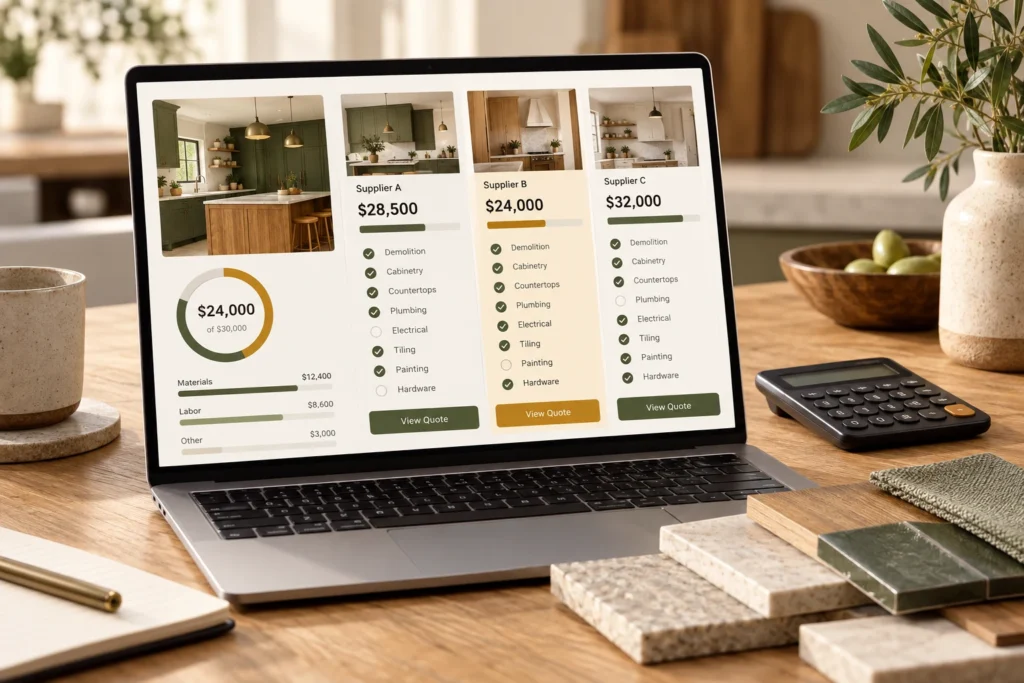
A project can be delayed by an inexpensive missing item just as easily as by a large purchase. A flooring order may arrive without the agreed transition pieces, or a tool may need an adapter that was shown in a photograph but not included in the box. Build the shopping list from the whole task, not only its main product.
Start with the agreed scope and the instructions for the items you are using. Keep quantities, exact variants and unresolved questions beside the product names. A short list with those details is more useful in a shop than a long list of generic categories.
Write what the quantity means
Record the unit for each line: cans, boxes, metres, pieces or one quoted service. Keep the measured requirement separate from the rounded purchase quantity. If flooring is sold in packs, record both the coverage needed and the whole-box count for the exact selected product.
Do not copy a quantity from an inspiration project without checking your own dimensions and layout. Example allowances are not universal requirements. Ask the supplier or installer about the actual installation plan and keep the answer with the calculation so you can revisit it if the product changes.
Match the complete product identity
Include the model, size, finish code and package contents where relevant. A family name alone may cover several versions. Compare the included-items list with the exact listing you are ordering, especially for tool kits, batteries, chargers and accessories.
For materials where batches matter, ask how matching stock is supplied and record the agreed details. Keep substitutes as separate proposed entries until you have checked their suitability. A similar colour or nearly identical model number is not enough to assume that the replacement will do the same job.
Add the supporting costs
Consider delivery, collection, removal, compatible consumables and any hired equipment included in the plan. Keep these as visible budget lines. An attractive shelf price can lose its advantage once an extra delivery or missing accessory is added.
Record the seller’s current returns terms and relevant dates before purchasing. Custom, opened or mixed products may have different conditions from unused standard stock. Do not rely on a remembered policy from a previous order. Keep the confirmation with the receipt and the product details.
Prepare a place for the delivery
Measure the route and the available storage area for bulky packages. Check packaged dimensions, handling requirements and the supplier’s delivery service. A product that fits the room after assembly can still arrive in packaging that is difficult to get through the entrance.
Plan where materials will wait under the conditions specified by their manufacturer. Keep household routes usable and do not assume the delivery team will move items beyond the service you arranged. If access is uncertain, resolve it with the supplier before the delivery date.
Check the order before the project starts
Compare quantities, labels and visible condition with the order while you still have the packaging and delivery information. Record discrepancies promptly through the seller’s process. Photograph useful product and batch labels, and keep them with the project rather than relying on a box that may be discarded later.
After the work, record what was used, returned or retained as spare stock. Label useful leftovers with the project and product information. The completed shopping list then becomes a reference for maintenance and future purchases, instead of an abandoned checklist that stops being useful as soon as the delivery arrives.
Open Project Budget to organise your own inputs and keep an editable project.