

When two contractors receive different descriptions of a job, their quotes can differ for reasons that have little to do with price. One may include preparation and disposal while another prices only the visible finish. A short shared brief gives everyone the same starting information and makes the remaining questions easier to identify.
You do not need to design the technical solution yourself. Describe the result, the location, the known constraints and what you want the contractor to assess. Keep assumptions labelled so a preliminary idea does not look like an instruction to proceed.
Describe the scope in ordinary language
Name the room and the work you want considered. List what is included and what is excluded. For a modest room refresh, you might describe the surfaces to be addressed, the furniture that stays and the finishes still to be selected. Avoid adding unrelated repairs during each separate conversation without updating the shared brief.
Include photographs that show the overall area and specific questions. Give each image a caption and location. Measurements can help the discussion, but state whether they are your preliminary notes and ask the contractor to verify the dimensions needed for their work.
Separate the outcome from the method
Say what needs to work better, then ask what assessment and method are appropriate. An unexplained damp patch, an unknown old surface or a proposed change involving building services should not be reduced to a cosmetic instruction because the desired finish looks simple.
Record questions you cannot answer, including access, preparation, specialist involvement and any permissions or approvals relevant to the project. Ask the appropriate qualified person or local authority where necessary. A browser budget cannot establish the legal or technical requirements of a property.
Ask for the same cost categories
Request enough detail to understand the proposed scope, named products or allowances, exclusions and total price. Keep tax treatment, delivery, disposal and other relevant charges visible. Do not invent a breakdown if a contractor provides a bundled price; ask what that price includes.
Compare each response against the same scope list. Mark omitted or uncertain items as questions, not zero-cost entries. If one quote assumes a particular finish and another leaves an allowance, note that difference before comparing their totals. The lower number may represent a different job.
Discuss timing and household use
Explain the access arrangements and the parts of the home that must remain usable. Ask about sequencing, material lead times and product-specific waiting periods. Keep proposed dates distinct from confirmed arrangements. A broad availability window is not the same as an agreed start date.
Write down who will supply each item and what happens if a specified product is unavailable. Agree how changes will be documented before they affect the work or cost. Keep the original brief and the later change record together rather than overwriting the earlier version.
Plan the handover before the work ends
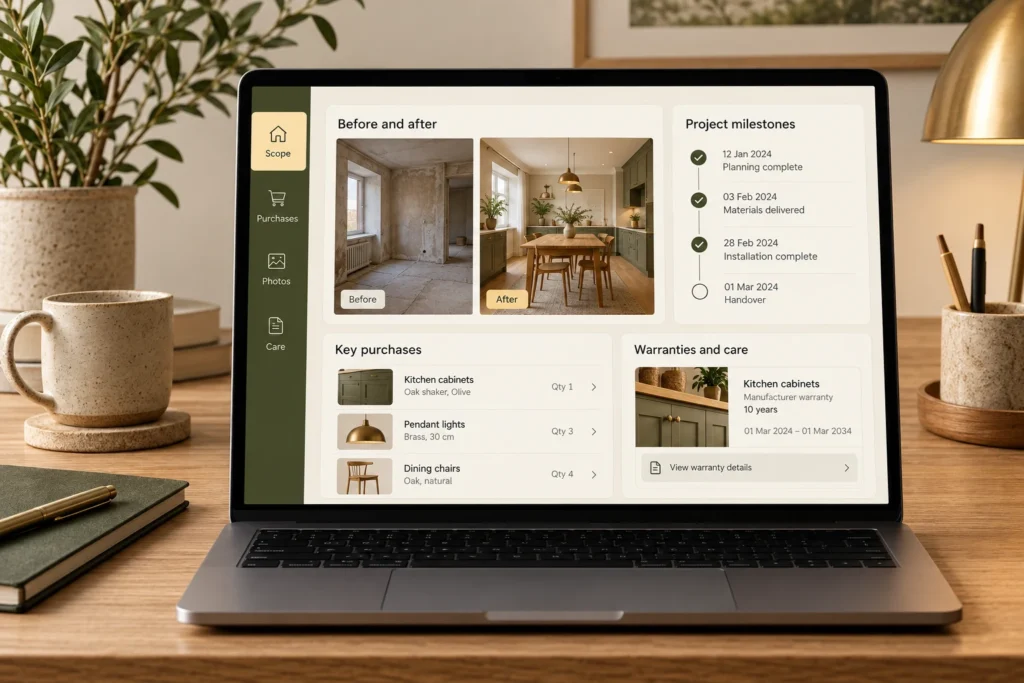
Ask what manuals, product codes, care information and warranty records will be provided. Prepare a completion walk-through based on the agreed scope and record unresolved items with a location and description. Keep payment records and the relevant agreements accessible.
The brief should help you hold a useful conversation, not turn you into the project’s technical designer. Its value is in making the intended result, included work and unanswered questions visible to everyone. Save a dated copy for each quote request and update the common version when the scope genuinely changes.
Open Project Budget to organise your own inputs and keep an editable project.