
A small room refresh does not need to begin with replacing everything. Start with a moment that happens often: the chair catches the cupboard door, the bedside surface disappears under charging cables, or the room works for guests but poorly for the person who uses it every day.
Choose one frustration and describe the improvement you want. This gives the project a useful scale. It also helps you recognise when an attractive purchase belongs on a future wish list rather than in the work you are planning now.
Watch how the room is used
For a few days, notice where objects accumulate and which movements are awkward. Write brief observations rather than judging the room against an inspiration image. If coats gather on a chair, ask where they arrive, how long they stay and whether the existing storage is convenient to reach.
Include everyone who uses the room. A desk arrangement that suits one person’s evening routine might obstruct another person’s morning access. Record the activities and the fixed features before choosing a style direction.
Separate what stays from what could change
List furniture and finishes you intend to keep. Measure the pieces whose positions affect the problem, including doors, handles and the room needed to use them. Keep a record of their condition and any manufacturer instructions relevant to moving or positioning them.
Make a second list of possible changes. Begin with rearrangement or removing an unnecessary item before adding something new. If a proposed change involves building services, unknown materials or work beyond a modest cosmetic refresh, treat it as a separate assessment and scope discussion.
Try an arrangement before buying
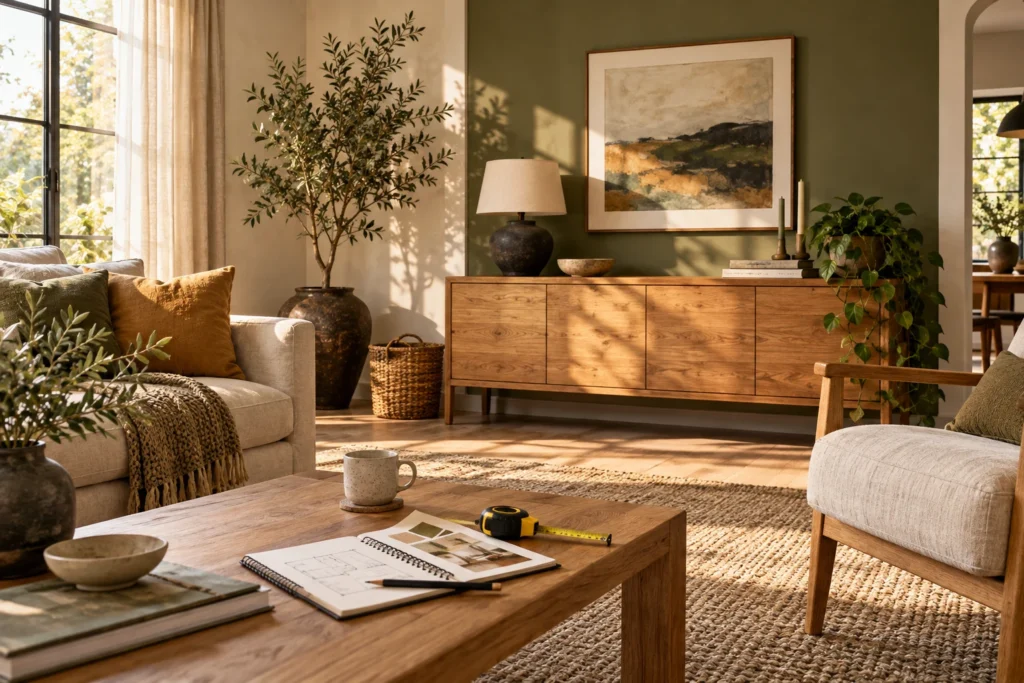
Sketch two options using the same measurements. Include door movement and storage access, not just the furniture rectangles. You can use a room planner to compare positions, then test the promising option in the actual space where it is safe and manageable to do so.
Do not assume a smaller item in a library matches the piece you plan to buy. Replace example dimensions with the supplier’s exact measurements and check the delivery route. For large or heavy furniture, arrange suitable help rather than turning the test into an unsafe moving exercise.
Limit the materials and purchases
Choose a small sample set around the finishes that remain. Label real products separately from inspiration, and compare physical samples under the room’s lighting when available. Decide which purchase directly addresses the original frustration and which is primarily decorative.
Build a short budget with the current prices, delivery costs and any agreed work. Keep an allowance for unresolved details separate from known purchases. If the total grows, reduce the scope or postpone an optional item rather than replacing a useful plan with a longer shopping list.
Keep the room usable during the change
Plan where displaced belongings will go and what must be restored at the end of each session. A bedroom still needs a usable bed; a shared dining area may need a workable meal arrangement. Include product-specific drying or curing requirements where relevant rather than promising the room will be ready on an arbitrary evening.
After the refresh, use the room for an ordinary week. Check whether the original problem has improved and record any small adjustment that remains. Keep the product codes and measurements you will want later. The project is successful when the room supports daily life more comfortably, even if the most effective change was moving one piece and buying nothing at all.
Open Room Layout to organise your own inputs and keep an editable project.