

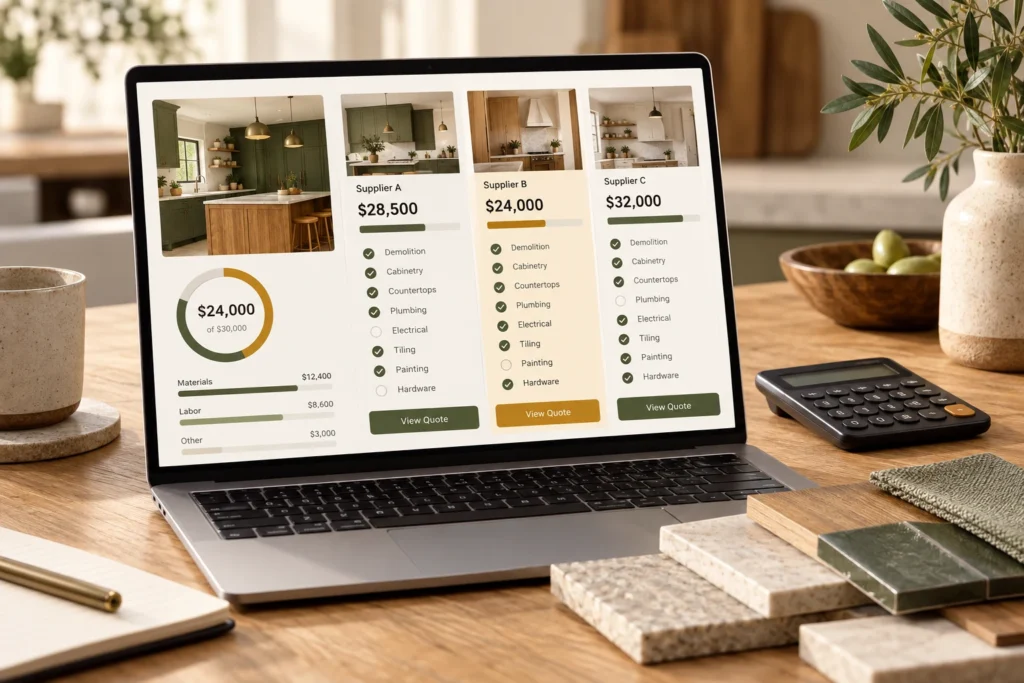
A project budget is easier to use when it distinguishes what you expect to spend, what you have committed to and what you have already paid. One total cannot explain all three. Start with the scope of one room or one job, then give each purchase or service its own line.
Use prices from your own shortlist and quotes. Example figures in a planner are there to demonstrate the calculation, not to predict local labour rates or material costs. Leave an unknown price blank and mark it as a question instead of entering zero to make the sheet look finished.
Give every line a quantity and unit
A useful line says what the amount buys: three cans, twelve boxes, one delivery or a quoted installation scope. Multiply the quantity by the unit rate. For an illustrative order of three cans at forty currency units each, the line estimate is 120. It is a small calculation, but the quantity matters when the room plan changes.
Keep the currency consistent within the project. If a supplier quote uses another currency, record the conversion you intend to use and its date outside the original quote. Do not silently add unlike currencies or treat a changing exchange rate as a fixed material cost.
Separate tax and contingency
Check whether entered prices already include tax. If they do, adding the same tax rate again inflates the estimate. If they do not, apply the relevant amount once and show it separately. Where purchases have different tax treatment, use the actual quoted totals or a record that represents those differences rather than forcing one rate across everything.
A contingency is a planning allowance, not money already spent. For example, a ten percent allowance on an illustrative 1,000-unit base would be 100. Record what your allowance is intended to cover, such as uncertain quantities or a change discovered after professional assessment. It should not conceal a large item you already know is missing.
Compare quotes against the same work
Create a shared list of scope items before entering competing quotes. A lower total may omit disposal, delivery, preparation or a named finish. Mark each quoted line against the same scope item and keep exclusions beside it. If a quote bundles several tasks, ask the supplier to explain what is included rather than inventing a breakdown.
Avoid comparing a materials-only estimate with an installed price as though they offer the same thing. Note assumptions and allowances, and distinguish an optional extra from a required component. The comparison is useful when it shows unresolved questions, even if it cannot identify a winner yet.
Track payments without rewriting history
Record the agreed payment dates or milestones and the amount actually paid. An unpaid balance is not an additional project cost; it is the remaining portion of an existing commitment. Keep the receipt or confirmation with the corresponding line so it is possible to reconcile the budget later.
When a price changes, preserve the original estimate and enter the actual amount separately. That makes the difference meaningful. At the end of the project, review the largest differences and record why they happened. Perhaps the scope grew, a delivery charge was missed or an item was returned.
The finished budget should answer three ordinary questions: what remains to buy, what remains to pay and how much uncertainty is still unresolved. Export a dated copy before a major decision and keep the editable project backed up. That is more useful than a polished total that cannot explain its own ingredients.
Open Project Budget to organise your own inputs and keep an editable project.